


The short version
- A wetsuit should fit like a second skin: snug everywhere, no gaps at the neck, wrists or ankles, and no water pockets at the lower back or armpits. You should still be able to breathe deeply and lift your arms freely.
- On land, a good fit feels a bit too tight. Don't size up because of that first impression.
- Rinse in cool fresh water after every session. Dry it inside out, in the shade, on a wide hanger. No hot water, no washing machine, no dryer.
- Store it dry, hanging or flat, out of the sun and away from heat. Never folded in a hot car trunk.
- Fix small tears early with neoprene cement. A well-cared-for suit can last several seasons.
Two wetsuits of the same thickness can feel completely different in the water. The difference is almost always fit. A wetsuit works by holding a thin layer of water against your skin and letting your body warm it. If the suit is loose, that warm water keeps flushing out and getting replaced by cold. If it's too tight, you can't breathe, paddle or stay in long. This guide covers how to find the right fit, and how to care for the suit so it keeps that fit for years.
How a wetsuit should fit
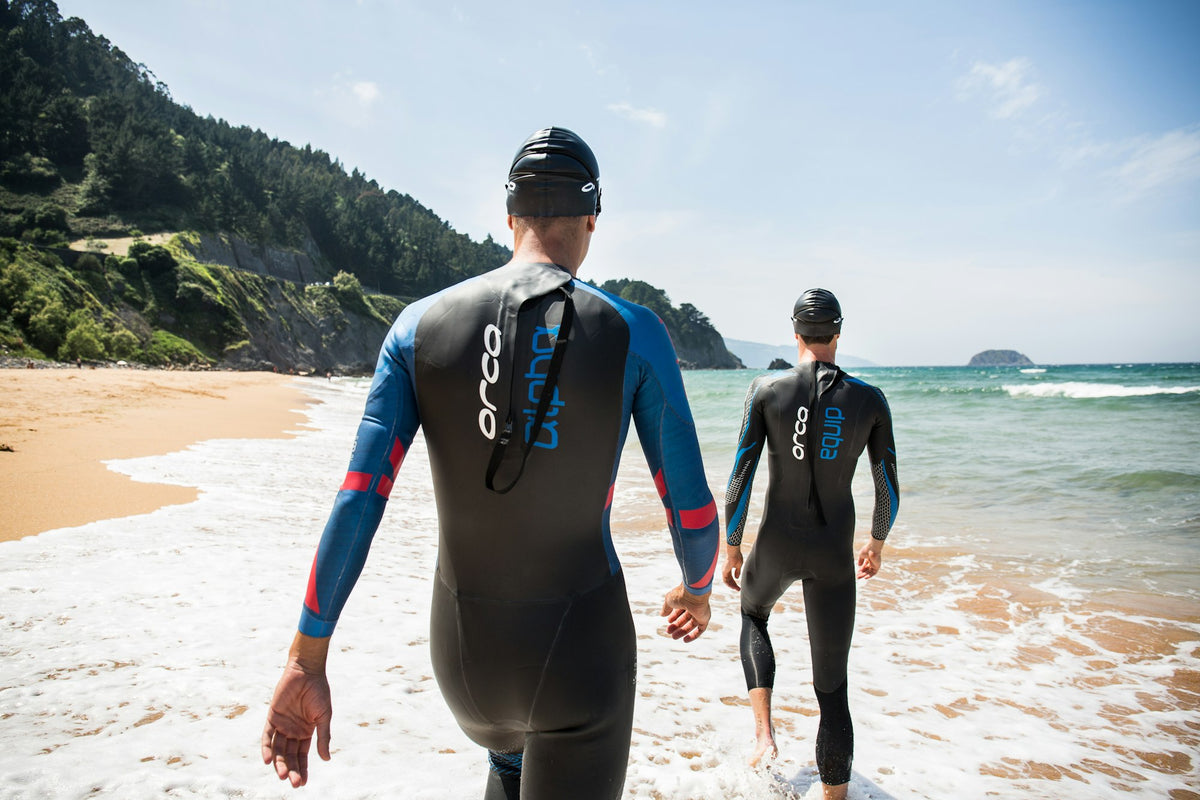
Wetsuit makers describe the ideal fit the same way: snug and flush against your body, like a second skin, with full range of motion. One swim-suit maker compares it to "a firm full-body hug" rather than a compression garment. That's the feeling you're after.
Head-to-toe fit checklist
| Area | Good fit | Too big | Too small |
|---|---|---|---|
| Neck | Sits flat all the way around and seals without choking | Gapes when you turn or look down. Two fingers slide under easily when dry. | Leaves lasting marks, or you can't fit a fingertip under it comfortably |
| Shoulders and arms | You can circle your arms and reach overhead without fighting the suit | Wrinkles and folds in the armpits | Shoulder seams dig into your armpits, and lifting your arms feels like stretching a bungee |
| Chest | Snug, but you can take a full, deep breath | Loose fabric, water sloshing | You can't expand your ribcage for a normal breath |
| Lower back | Flat against your spine | A bag or pocket of neoprene that fills with water | Pulls tight across the hips when you bend |
| Crotch | Sits close to your body | Hangs low, with a gap you can pinch | Pulls down on your shoulders when you stand up straight (torso too short) |
| Wrists and ankles | Seal against your skin, ending near the wrist and ankle bones | Visible gaps, or the cuffs bunch up | Cuffs cut off circulation, or your hands tingle |
Signs your suit is too loose in the water: water sloshing in the lower back or thighs, sleeves or legs that fill and feel heavy, and a suit that shifts during the session. Signs it's too tight: numb or tingling hands, trouble breathing, or a zipper you can barely close.
Size charts are a starting point, not a verdict. Body shapes vary, and torso length is the most overlooked measurement. If you're tall for your weight, look for "tall" (T) or "long" sizing. A suit with a short torso pulls on your shoulders and neck all session.
Common sizing mistakes
- Sizing up because it feels tight on land. Neoprene feels tighter dry than wet. A suit that feels a little snug in the shop is usually right.
- Ignoring torso length. If the crotch hangs low but the shoulders are tight, you need a different cut, not a bigger size.
- Buying a hand-me-down. Wetsuits mold to their owner over time, which is why lending one out for long is generally discouraged.
- Kids' "room to grow." A baggy suit on a child flushes constantly and is colder than a smaller, older suit.
How to put on a wetsuit (without tearing it)
- Stand on a mat or towel, not gravel or grass. Rough ground scuffs the knees and seat.
- Take off rings and watches, and watch your nails. Pinch the neoprene with the pads of your fingers, never with fingernails.
- Feet first. A plastic bag over your foot helps it slide through the leg. Pull each leg up a little at a time, working the neoprene up from the ankle so there's no slack behind the knees.
- Pull it well up into the crotch before you do the torso. Most "it doesn't fit" complaints are really "it isn't pulled up far enough."
- Arms one at a time, then work the shoulders up until the underarm panels sit in your armpits.
- Zip up (a buddy helps with back zips), then shrug, bend sideways and circle your arms to let the suit settle.
To take it off, peel it inside out from the shoulders down. Don't yank on the cuffs. Do it standing on a mat or towel again.
Shop the gear: Wetsuits & apparel · Changing mats & beach gear
Wetsuit care: the five-minute routine
Salt, sand, sun, heat and chlorine are what wear neoprene out. Manufacturers' care instructions agree on the basics:
- Rinse after every session in cool or lukewarm fresh water, inside and out, until the salt, sand and dirt are gone. A shower or a big bucket works.
- Never use hot water. Heat damages neoprene's flexibility and durability.
- Wash periodically with a dedicated wetsuit shampoo or a mild, non-detergent soap. One major brand suggests every 3–5 sessions, and always before long-term storage. Skip harsh detergents and bleach.
- Dry inside out in the shade. UV and ozone break down neoprene. Once the inside is dry, flip it and dry the outside.
- Hang it on a wide hanger, never a wire one, which creases and cracks the shoulders. Many people fold it over a hanger at the waist to keep the weight off the shoulders while it drips.
| Do | Don't |
|---|---|
| Rinse in cool fresh water every time | Use hot water, a washing machine or a dryer |
| Use a wetsuit cleaner or mild soap occasionally | Use detergents, bleach or dry cleaning |
| Dry inside out, in the shade | Leave it in direct sun or a hot car |
| Hang on a wide or padded hanger | Use a wire hanger, or fold it to dry |
| Wax or lubricate the zipper occasionally | Iron it, or expose it to aerosols, petroleum jelly or solvents |
| Rinse right away after any chlorinated pool use | Use it regularly in chlorinated pools (chlorine degrades neoprene) |
A collapsible bucket, a wetsuit hanger and a changing mat make the post-session routine painless. Change on the mat, drop the suit in the bucket, and fill it from the beach shower or a jug of fresh water before you drive home.
Storage: short-term and off-season
- Make sure it's completely dry on both sides before storing. A damp suit in a bag smells awful within days.
- Hang it on a wide-shouldered hanger, or fold it over a horizontal hanger at the waist. You can also lay it flat. Avoid folding it into a drawer, which leaves permanent creases.
- Cool, dry, dark place: a closet, not a hot attic, a car trunk or a sunny garage.
- For the off-season, wash it with wetsuit shampoo before storing. See our winter storage guide.
Repairs: fix small problems early
Inspect your suit after each session. Small tears, about 1–2 inches, are easy to fix at home. Larger tears and failed seams are better left to a professional repair service.
- Rinse and dry the suit completely. Turn it inside out if the tear is on the lining side.
- Wipe the edges of the tear with rubbing alcohol.
- Brush a thin coat of neoprene cement on both edges. Let it dry until tacky, then add a second thin coat.
- Press the edges together evenly, without stretching, and weight or clamp them.
- Let it cure for at least 6 hours, ideally overnight.
- For extra strength, add another coat over the seam or bond a neoprene patch over it. Fill small gouges with a liquid rubber or urethane repair compound.
The most common cause of tears is fingernails during changes. The second is kneeling on rough ground while changing. A changing mat and the finger-pad technique prevent most repairs entirely.
How long should a wetsuit last?
It depends on how much you use it and how you care for it. One US manufacturer estimates about 2–4 years of regular surfing with proper care. Signs it's time to replace a suit:
- It feels noticeably colder than it used to at the same temperature.
- The neoprene is stiff, cracked or compressed, especially at the shoulders and knees.
- Seams are leaking, or the seam tape is peeling.
- The fit has changed: it's baggy where it used to seal, or you've changed shape.
If you're replacing your suit, check our wetsuit thickness chart to make sure you're buying the right thickness for your water.
FAQ
Should a wetsuit be tight?
Snug, yes. Painful, no. It should feel like a firm hug with no gaps or water pockets. If you can't breathe deeply, your hands tingle, or the neck leaves lasting marks, it's too small.
Do wetsuits stretch over time?
Neoprene relaxes a little and molds to your body with use. That's part of why a new suit feels tight at first. Don't count on it stretching a full size, though.
Can I put my wetsuit in the washing machine?
No. Manufacturers warn that washing machines damage neoprene and glued seams, and dryers can melt it. Hand-rinse in cool water, and use a wetsuit shampoo occasionally.
How do I get the smell out of my wetsuit?
Soak it in cool water with a wetsuit cleaner, rinse thoroughly, and dry it fully inside out in the shade. The smell comes from bacteria in a suit stored damp, so drying completely is what stops it from coming back.
Can I wear my wetsuit in a pool?
Occasionally, if you rinse it right away. Chlorine degrades neoprene, and some manufacturers advise against regular use in chlorinated pools.


 Water
Water