


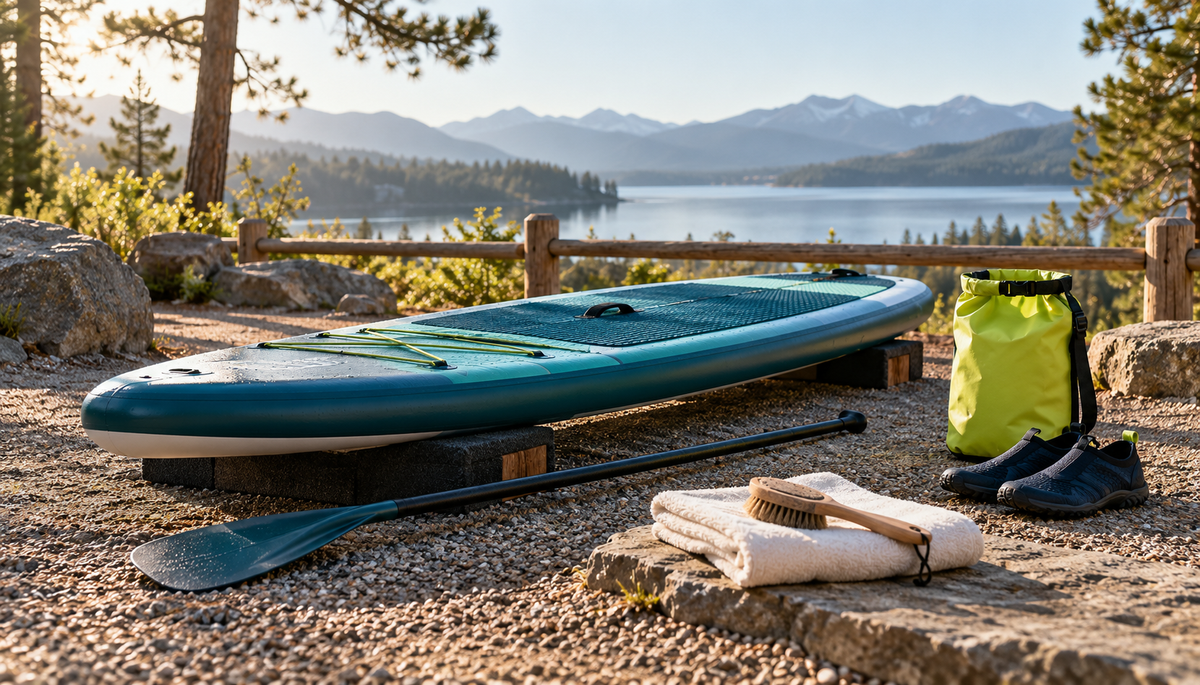
Two lakes in one weekend can sound like an easy plan: finish paddling, load the car, and head to the next launch. The equipment needs its own stop between those outings. A board, kayak, wet shoe, or damp bag can carry more than water to the next place.
Clean, drain, and dry is a practical routine for reducing the spread of aquatic invasive species. For paddlers, the important part is treating everything that touched the water as part of the kit. Here is how to build the routine into a trip without leaving the fiddly jobs until you arrive at the next lake.
Start with the next launch
Before planning a lake-to-lake trip, check the destination's official boating and invasive-species guidance. Look for inspection requirements, cleaning facilities, drying periods, and any documentation you need to bring. A general checklist cannot tell you whether your particular equipment is cleared to launch.
Make a short note of where and when each boat or board was last used. If you need an inspection, that gives you a clear answer instead of a guess in the parking lot. Keep any inspection paperwork with the rest of your trip information.
The Minnesota DNR's paddling guidance suggests planning visits to waters without known infestations before visiting listed infested waters, and considering separate equipment for different locations. Check the equivalent local information wherever you paddle. Neither approach replaces cleaning.
Clean before packing the car
Take the equipment out of the water and use the designated cleaning area when one is available. Work methodically around the board or boat, removing visible plants, animals, mud, and debris. Give the small recesses the same attention as the large, easy-to-see surfaces.
For a SUP, check the fin, fin box, deck fittings, handle, and leash. For a kayak, include the hull, cockpit or footwells, hatch areas, rudder, and accessible compartments. Then move through paddles, footwear, life jackets, bags, and any fishing equipment. The National Park Service's paddling-equipment guidance specifically includes these smaller items and recommends keeping cleaning activity away from storm drains and other water bodies.
A soft brush or sponge and an absorbent towel are useful additions to the car kit. Use tools that suit the equipment's materials, and follow posted cleaning-station instructions. Put the cleaning kit somewhere you can reach before unloading everything else.
Drain the places you cannot see at a glance
Empty retained water before leaving the access area, following local requirements. Check compartments, footwells, and other water-holding equipment rather than assuming a quick tip of the boat has finished the job. Keep discharged water away from other lakes, streams, and storm drains.
Drainage matters because tiny organisms can travel in water that looks clear. The U.S. Fish & Wildlife Service explains that draining helps remove nearly invisible organisms, including zebra mussel larvae. A clean-looking hull is only one part of the check.
Follow the owner's instructions for accessing and draining your craft. An inflatable board's air valve is not a wash-water inlet: do not improvise by filling its air chamber with water. If water is trapped somewhere you cannot safely access, ask the manufacturer or an inspection station how to proceed.
Give drying its own place in the schedule
A damp bundle sealed in a transport bag is easy to forget. At your drying location, unpack it. Open the bags, separate the footwear and accessories, and make the hidden wet areas accessible. Keep the equipment within its manufacturer's storage and temperature guidance.
The National Park Service recommends removing lingering water with a sponge or towel and allowing inflatable craft to dry before deflating them. Inspect the places that stay wet longest, including folds and removable accessories. A dry deck does not tell you whether the rest of the kit is dry.
Drying recommendations vary by destination and risk. Minnesota DNR recommends drying gear for five days before using it in another lake or river whenever possible. Treat that as a regional recommendation, not a universal clearance period. If your itinerary leaves too little time, ask the destination about an approved inspection or decontamination option before you travel.
Leave specialized treatments to the right instructions
Do not turn a general cleaning checklist into a homemade chemical or heat-treatment recipe. The National Park Service's clean-drain-dry advice says to check equipment manuals before using hot, high-pressure water and advises against chemicals such as bleach for this purpose because of environmental and health risks.
When a destination calls for decontamination, contact its authorized service or inspection team. Tell them what your craft is made from and where it was used. That is especially helpful for inflatable boards, glued seams, coated fabrics, and flotation equipment whose care instructions may differ.
Use a final handoff check
- The craft and every wet accessory have been checked for debris.
- Retained water has been drained as local rules require.
- The equipment has dried, and the destination's additional requirements are satisfied.
- Cleaning tools and transport bags have been checked too.
- Any inspection record is easy to find.
Add this routine to the return end of your paddleboarding pre-launch checklist. Planning both ends of the outing makes the next one simpler, while helping protect the water you came to enjoy.
 Water
Water