
The short version
- Kneeboarding is the easiest board sport behind a boat. You ride on your knees, strapped in, at a modest speed, and almost anyone gets up on the first try.
- Wakesurfing means riding a boat's wave with no rope once you're up, at about 10–11 mph. Only do it behind a boat the manufacturer approves for wakesurfing.
- Wakeskating is like skateboarding on water: no bindings, grip tape or foam, and about 20–21 mph. It's harder to learn but endlessly creative.
- Size wakesurfers and wakeskates mainly by rider weight. Bigger boards are easier to learn on.
- Every rider wears a non-inflatable USCG-approved life jacket. Wakeskaters should add a helmet.
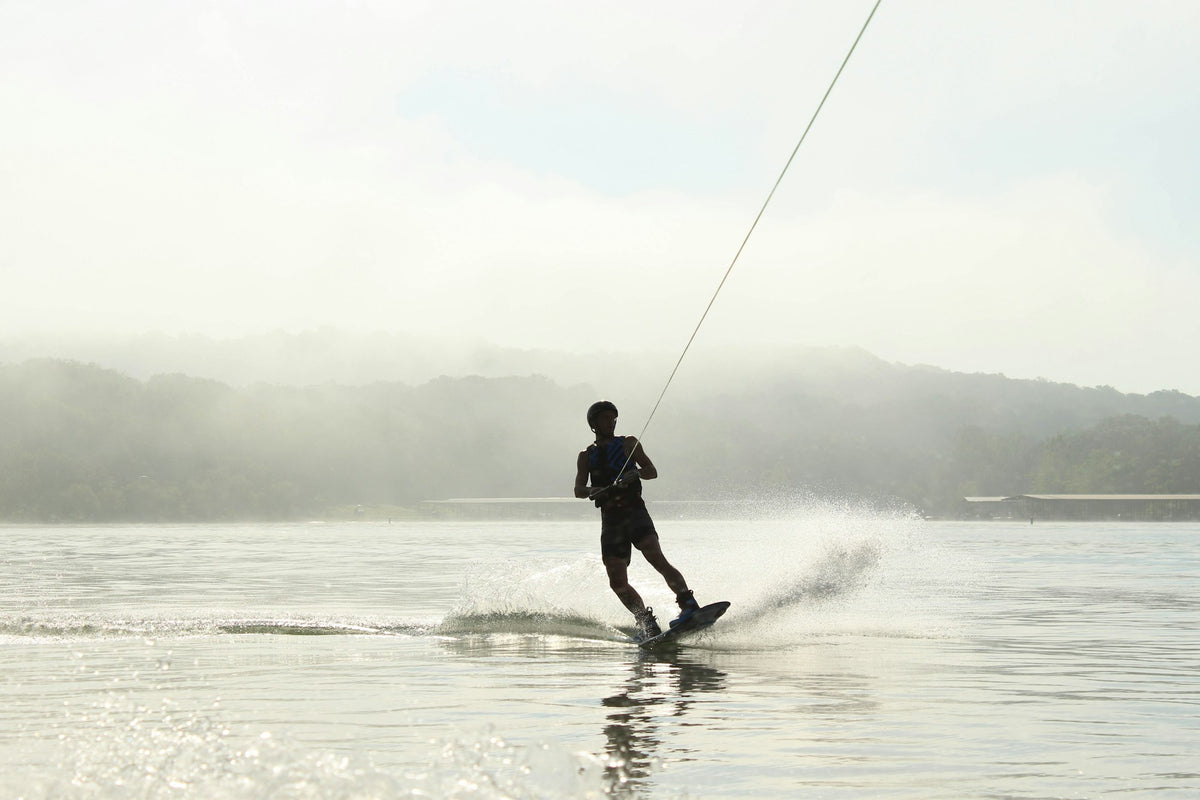
Waterskis and wakeboards get most of the attention, but three other boards behind the boat deserve a place in your quiver. A kneeboard gets kids and nervous adults riding in minutes. A wakesurfer turns a slow-moving boat into an endless wave. A wakeskate brings skateboard tricks to the lake. Here's how each one works, who it suits, what to buy and how to set up the boat.
At a glance: which board is for you?
| Kneeboard | Wakesurf | Wakeskate | |
|---|---|---|---|
| Rider position | Kneeling, thigh strap | Standing, no bindings, rope dropped once riding | Standing, no bindings |
| Typical speed | About 15–20 mph (Jobe's starting range) | About 10–11 mph (WSIA) | About 20–21 mph (WSIA) |
| Rope | Standard tow rope | Short wakesurf rope, rider starts about 10–15 ft behind the platform | About 65 ft to start |
| Boat needed | Almost any tow boat | An inboard boat approved for wakesurfing, usually with ballast | Any tow boat. Clean, moderate wakes are best |
| Learning curve | Easiest | Moderate. The rope-free ride takes a few sessions | Hardest to start, endless to master |
| Best for | Kids, beginners, low-impact fun | Families, surfers, social sessions | Skaters and trick-focused riders |
Kneeboarding: the friendliest way to ride a wake
A kneeboard is a short, wide board with molded knee wells, a padded deck and a thigh strap that locks you in. Recreational boards are usually rotomolded plastic, which is tough, stable and forgiving. Performance boards are compression-molded fiberglass with sharper edges for carving and spins.
How to get up
- Lie on your belly on the board, chest forward, knees tucked into the knee wells and feet trailing in the water. If the board has a tow hook at the nose, set the handle in it. Otherwise hold the handle with your hands on the board's sides.
- Arms under the strap. Leaving the strap open across the deck makes it easy to pull over your thighs once you're up.
- Let the boat pull. As the boat starts slowly, stay low and let the board plane. Don't pop up early.
- Come up to your knees. Slide your knees forward into the wells until they're under you, then sit back on your heels.
- Strap in. Once you're steady, pull the strap snug across your thighs and take the handle out of the hook, holding it knuckles-up with arms extended.
Riding
- Weight back. Too much weight forward makes the nose dig in, and you face-plant.
- Turn with your head and shoulders, then lean onto the edge on that side.
- Start inside the wakes, then try crossing them at a gentle angle as you get comfortable.
- Speed: Jobe suggests starting around 15–20 mph and adjusting for the rider's weight and comfort. Go slower for small kids.
Many kneeboards include a hook for the handle, which makes starts nearly automatic. Before the first fall, practice releasing the strap with one hand so the rider knows they can get out of it quickly.
Wakesurfing: ride the wave, drop the rope
In wakesurfing, the boat moves slowly while weighted (usually with ballast) to one side to throw a big, clean, surfable wave. The rider starts with a short rope, gets up, moves into the wave's "pocket," and then tosses the rope back into the boat to surf rope-free. The low speed makes it one of the most beginner-friendly and social tow sports. It also doesn't need glassy water.
Only wakesurf behind a boat whose manufacturer recommends it for wakesurfing. That usually means an inboard, with the propeller well forward under the hull. The rider stays close to the stern, so carbon monoxide and the prop are real hazards. Some states, including Pennsylvania, prohibit wakesurfing behind outboard, sterndrive and jet-drive boats. See our tow sports safety guide for the engine-off rules.
Boat setup
- Speed: About 10–11 mph, per WSIA, adjusted to find the cleanest wave shape.
- Rope: Use a dedicated wakesurf rope with a smaller handle and a thick braid. Don't use a thin, non-stretch wakeboard rope. Start about 10 ft behind the platform and adjust to find the push.
- Ballast: Balance the load to one side to shape the wave. Use only the boat's ballast system or water-filled ballast bags, never solid weights. Stay within the boat's weight and passenger capacity, and drain ballast systems before moving the boat to another lake to avoid spreading invasive species.
- Driving: Straight, steady and smooth. Avoid sudden slowdowns that collapse the wave. Check the mirror. Never turn around to look.
Choosing a wakesurf board
evo's chart sizes boards by rider weight and style:
| Rider weight | Surf style | Skim style | Hybrid |
|---|---|---|---|
| Up to 110 lb | Up to 4' | Up to 4' | Up to 4' |
| 100–170 lb | 4'–4'8" | 4'–4'4" | 3'9"–4'8" |
| 150–200 lb | 4'8"–5' | 4'4"–4'10" | 4'8"–5'3" |
| 190–250+ lb | 5'+ | 4'10"+ | 5'+ |
- Surf style boards look like mini shortboards. They have the most volume, drive and speed, which makes them the best choice for learning.
- Skim style boards are smaller and thinner with small fins. They're loose and spinny, and made for tricks.
- Hybrids blend the two.
Beginners should go bigger and choose soft rails. Riders behind a boat with a smaller wave should also size up.
Your first wakesurf ride
- Float on your back with heels on the board's edge, the board on its side and the rope over the board.
- As the boat pulls, let the board come under your feet. Stay crouched and let the boat stand you up, much like a wakeboard start but slower.
- Ride up toward the wave. Shift weight onto your front foot to speed up and onto your back foot to slow down.
- Once you feel the wave pushing you and the rope goes slack, toss the rope toward the boat, well away from your body.
Never wrap a wakesurf rope's coils around your hand or arm. If you fall, throw the rope away from you. And never "teak surf" or hold onto the swim platform while the boat is moving. It exposes riders to concentrated exhaust, and Pennsylvania makes it illegal.
Shop the gear: Wakesurf, Wakeskate & Kneeboards · Life Jackets
Wakeskating: skateboarding on water
A wakeskate looks like an oversized skateboard deck. There are no bindings, and your feet sit on grip tape (with shoes) or an EVA foam pad (barefoot). With nothing locking you in, every ollie and shove-it is up to you. That's the appeal, and the challenge.
Sizing and construction
| Rider weight | Wakeskate length |
|---|---|
| 90–170 lb | 39"–41" |
| 150–200 lb | 42"–43" |
| 180+ lb | 44"–46" |
- Size up rather than down. Longer boards stay on plane at lower speeds.
- Single-deck boards are one piece. Bi-level boards have a separate top deck attached at the tips, which gives more pop and a skateboard feel.
- Grip tape needs shoes. Foam is for barefoot riding.
- Fins: Taller, longer fins add stability for beginners. Remove them later for a looser feel.
- Rocker and concave: Continuous rocker is smooth and predictable. Concave decks pop better for tricks.
The start
Per WSIA's technique, push the board under the water beneath your feet, crouch with bent knees and let the boat's pull bring the board up under you. Stay crouched for balance, then stand with knees slightly bent and the handle near your front hip. Use about a 65 ft rope and a speed of around 20–21 mph, slightly slower than wakeboarding.
WSIA strongly recommends helmets for wakeskating, especially once you start hitting rails or features. Add a non-inflatable impact vest that's USCG-approved.
Safety basics for all three
- Life jackets: Every rider wears a properly fitted, USCG-approved life jacket. Inflatables aren't approved for tow sports. See our life jacket guide.
- Observer and signals: A dedicated observer watches the rider, and everyone agrees on hand signals before starting.
- Engine off near the stern: Turn the engine off when riders are near the platform, putting on boards or climbing aboard.
- Space and daylight: Keep a wide buffer from docks, shore and other boats, and tow only in daylight.
- Wake responsibly: Big surf wakes travel a long way. Ride in open water away from shorelines, docks and small craft.
New to tow sports altogether? Start with wakeboarding for beginners or water skiing basics.
Shop the gear: Wetsuits & Rash Guards · Boating & Dock
FAQ
Can I wakesurf behind an outboard or sterndrive boat?
It isn't recommended. Wakesurfers ride a few feet from the stern, close to the propeller and exhaust. Only wakesurf behind a boat the manufacturer approves for it, and check your state's rules. Pennsylvania, for example, prohibits wakesurfing behind outboard, sterndrive and jet-drive boats.
What's the easiest tow sport for kids?
Kneeboarding and tubing. A kneeboard gets kids up almost immediately at modest speeds. Use a child-sized life jacket and go slow at first.
Do I need special shoes for wakeskating?
Only if your board has grip tape. Grip tape is rough on bare feet. Foam-topped wakeskates are made for barefoot riding.
How fast do you go wakesurfing?
About 10–11 mph, per WSIA. The exact speed depends on the boat, ballast and rider, so adjust in small steps to find the cleanest wave.